


MASONRY STEPS AND STAIR REPLACEMENT
Worn, settled, or structurally compromised steps can affect both the safety and appearance of a property. Cornerstone works with homeowners and commercial property owners throughout southeastern Massachusetts and surrounding areas to evaluate the existing entry and determine what the replacement actually requires.
With more than forty years of masonry experience, Chris looks beyond the visible treads and risers to the structure underneath. When replacement is the right solution, the work is planned from the base up, with proper proportions, suitable materials, and New England conditions in mind.
A SAFER, BETTER-BUILT ENTRY STARTS BELOW THE SURFACE
Entry steps should feel like a natural part of the property. They should complement the architecture, provide comfortable access, and remain stable through years of use and changing weather.
When existing steps are extensively cracked, settled, unstable, or improperly proportioned, covering the surface rarely solves the underlying problem. Cornerstone evaluates the existing structure and explains whether repair or replacement is the better long-term solution.
When replacement is needed, Chris looks at what is happening below the visible masonry as well as the steps themselves, so the scope addresses the underlying conditions rather than simply covering them.
BUILT AROUND THE ENTRY, THE PROPERTY, AND THE WAY YOU USE IT
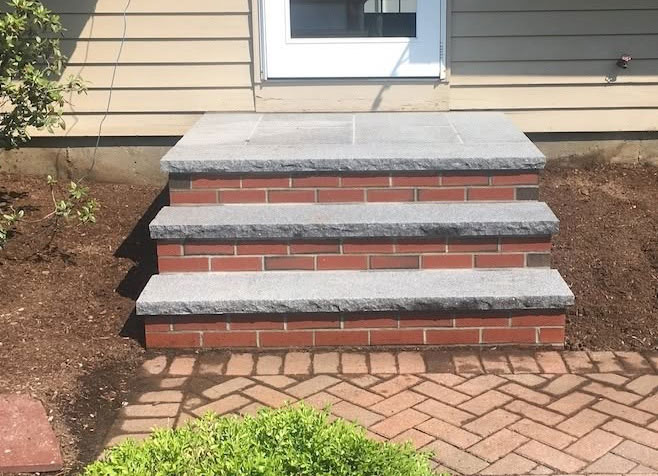
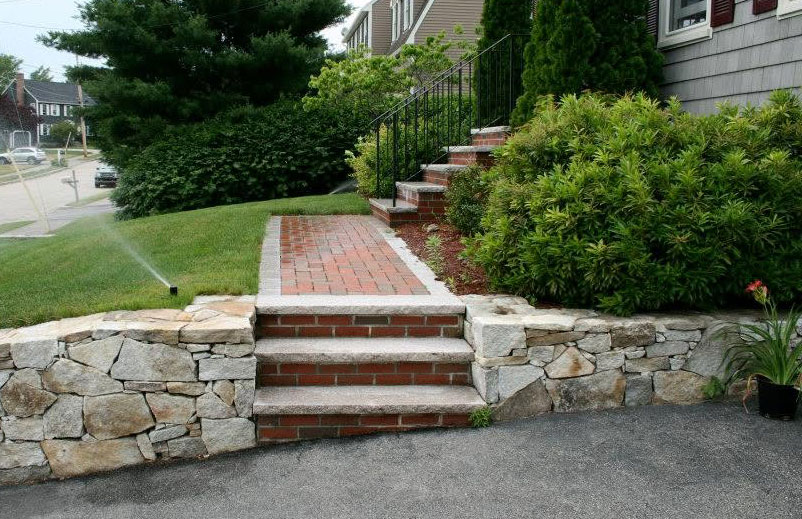
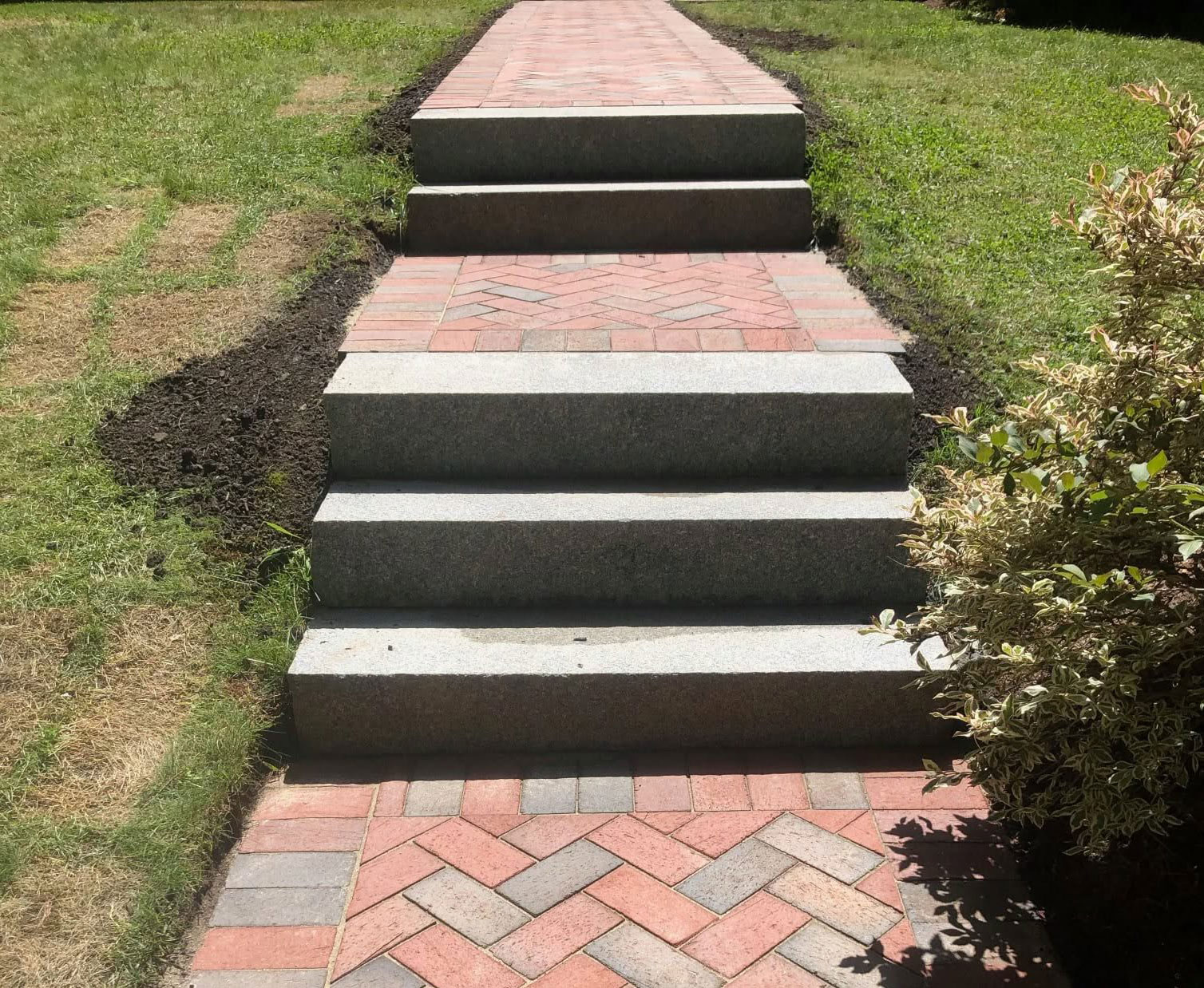
Granite Treads and Landings
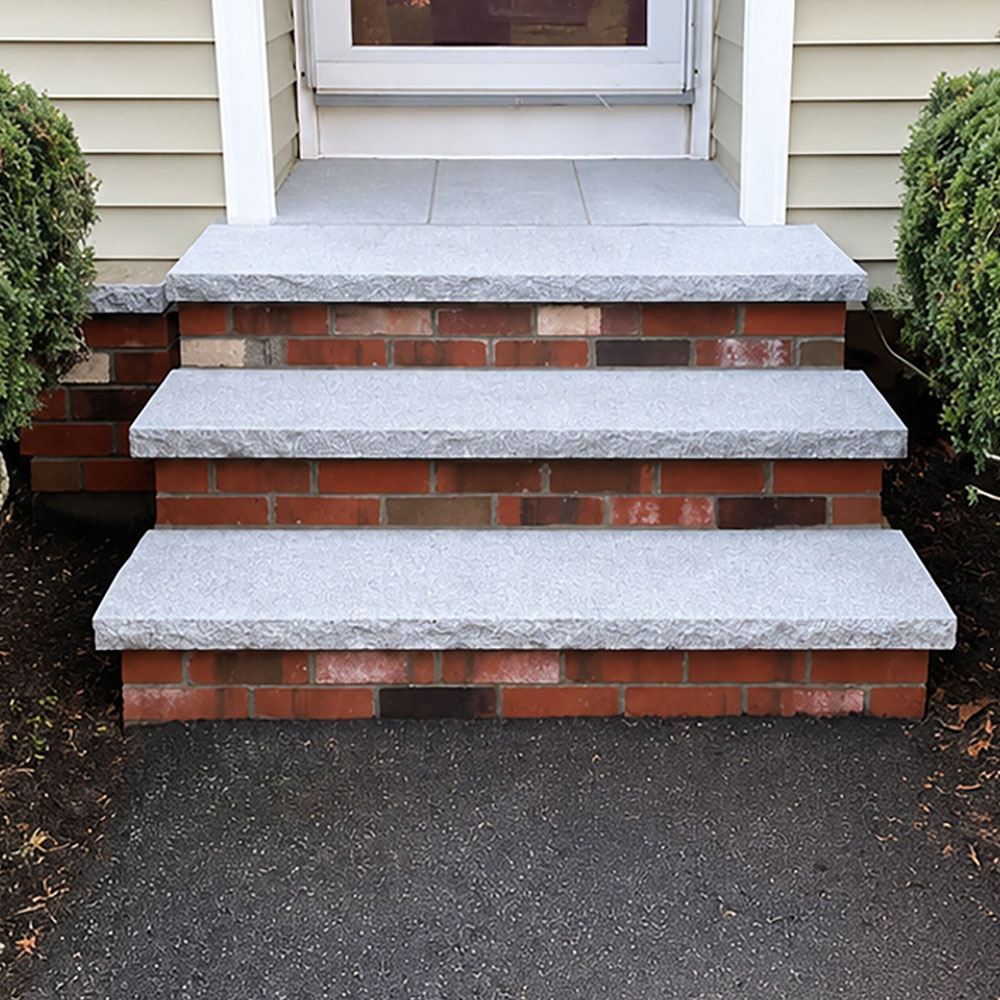
Granite provides a durable walking surface with the substantial appearance associated with traditional New England masonry. Options such as Blue Mist granite pair naturally with brick, block, and stone while retaining the natural variation of the stone from piece to piece.
Treads and landings are carefully measured and cut to create consistent dimensions and a finished entry that feels properly scaled to the building.
Brick, Block, and Stone Risers
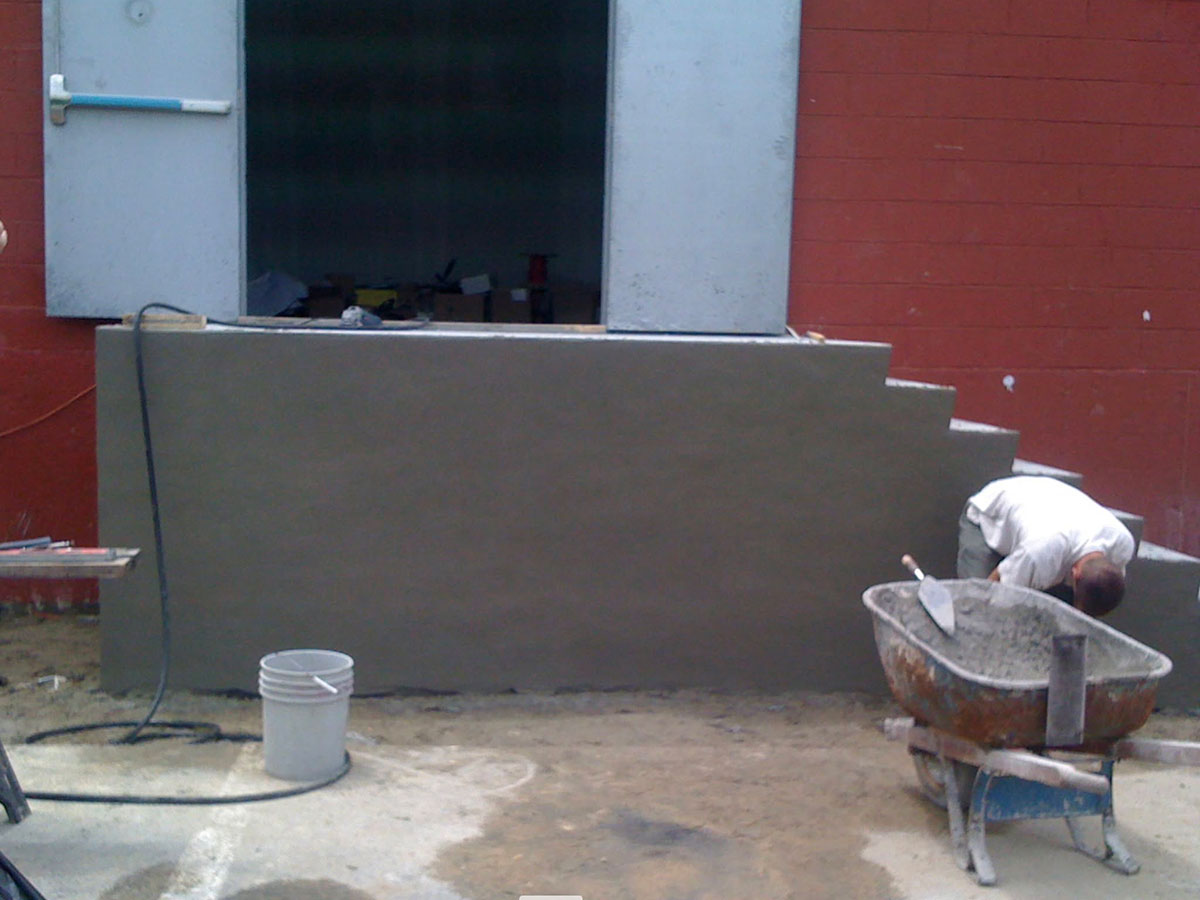
Brick and concrete block provide dependable structural support for new masonry steps. Brick can remain exposed for a traditional appearance, while prepared masonry can also be finished with natural or manufactured stone veneer.
Cornerstone helps clients select colors, textures, and materials that complement the home or commercial property rather than feeling added on afterward.
FOOTINGS, BASE, AND LAYOUT
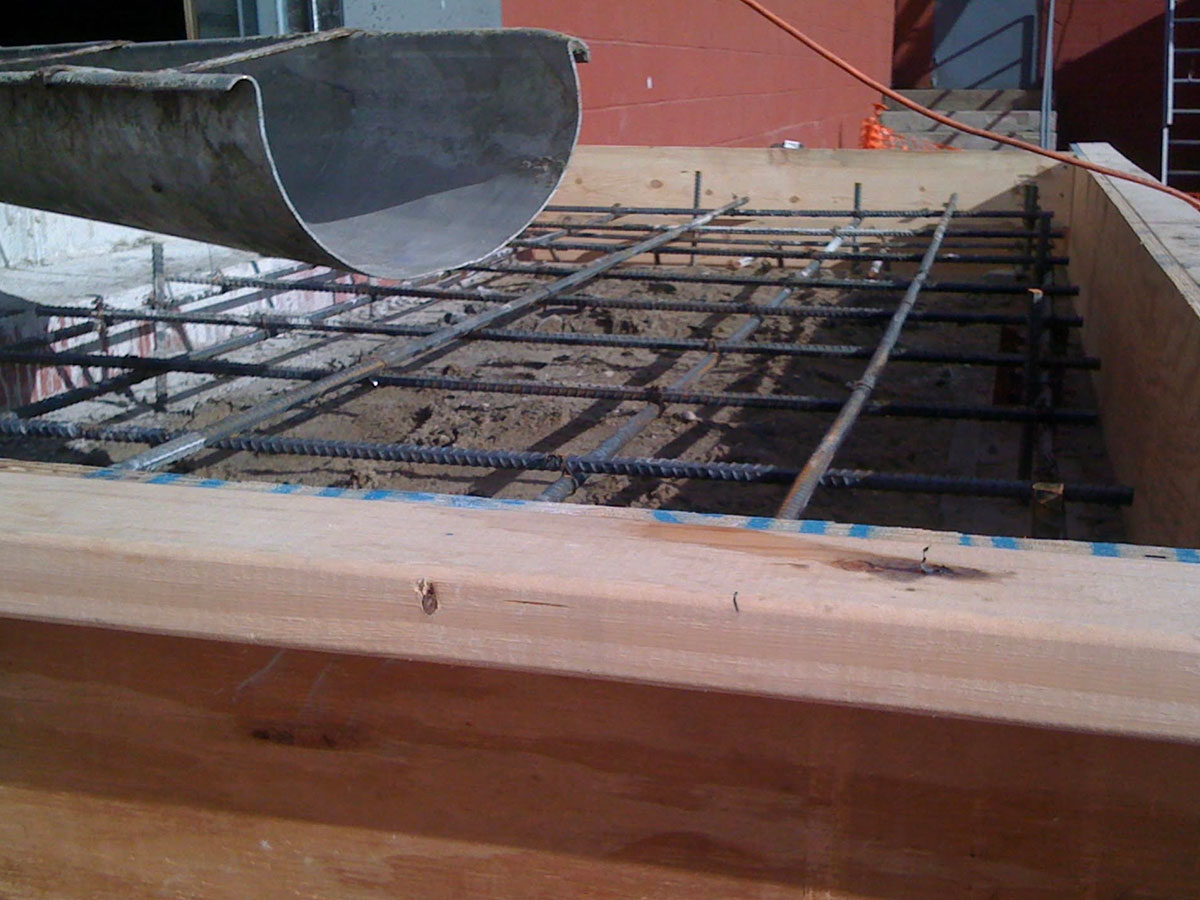
A lasting replacement begins with understanding what is happening beneath the visible masonry. Depending on the existing conditions, the project may include demolition, excavation, a new poured footing, base construction, and careful layout before the finished materials are installed.
Addressing the underlying conditions where needed allows Cornerstone to correct problems such as settlement, deterioration, or improperly configured step dimensions rather than simply building over them.
WHAT YOUR PROJECT MAY INCLUDE
Depending on the existing conditions and the needs of the project, Cornerstone can manage the work from removal and site preparation through masonry construction and the finished entry. The scope may include:
- Demolition and removal of existing precast or masonry steps
- Excavation and site preparation
- Poured concrete footing and base work
- Brick riser construction or masonry base work for stone finishes
- Granite tread and landing installation
- Natural or manufactured stone veneer finishes
- Resetting suitable existing stone when practical
- Material and design guidance
- Final review and cleanup
The estimate clearly defines the proposed scope, materials, and costs before work begins.
PLANNED FOR THE PROPERTY AND HOW THE ENTRY IS USED
Entry Steps for Homeowners
Front steps are more than a way into the house. They help shape the character of the entry and should feel like they belong with the home.
Cornerstone works directly with homeowners to evaluate the existing entry, select materials, and plan replacement steps suited to the home’s architecture, entry height, and site. From traditional brick and granite to stone-faced risers, Chris helps homeowners make choices that work both practically and visually.
Commercial Steps and Access Areas
Commercial entries and service areas need to withstand frequent use while providing dependable access to the building.
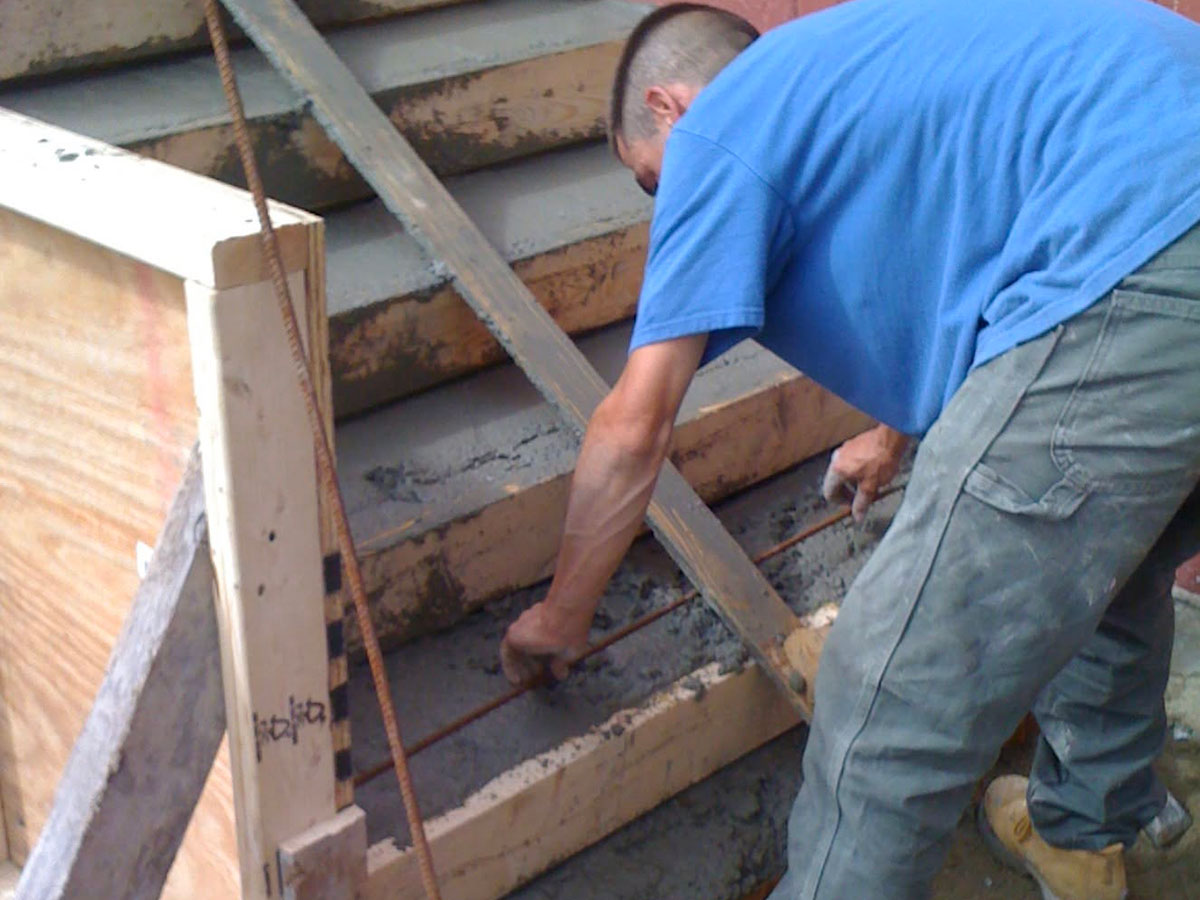
Cornerstone provides masonry and concrete step construction for commercial properties, including primary entrances, rear access areas, and service or loading areas. The work is planned around existing conditions, surrounding surfaces, access needs, and the day-to-day operations of the property.
The Details That Make Masonry Steps Last
The visible materials are only one part of well-built masonry steps. Footing conditions, drainage, tread dimensions, riser consistency, and the way the steps connect to the surrounding property all influence how the entry performs over time.
Chris brings practical experience to each of those decisions. He evaluates what should be removed, what may be reused, and how the replacement should be laid out before installation begins.
The objective is straightforward: an entry that looks appropriate for the property, feels natural and comfortable to use, and is built correctly for the conditions beneath and around it.
See Masonry Step Replacement in the Field
Replace Worn Steps With an Entry Built to Last
If your existing steps are cracked, settled, deteriorated, or no longer working well for the property, Cornerstone can help you understand what needs to change and what may be worth preserving.
Start with a conversation about the existing conditions, your material preferences, and how the entry needs to look, feel, and function. Chris will help you understand the options and develop a clear scope for the work.
Masonry Step Replacement FAQs
How do I know whether my masonry steps need repair or replacement?
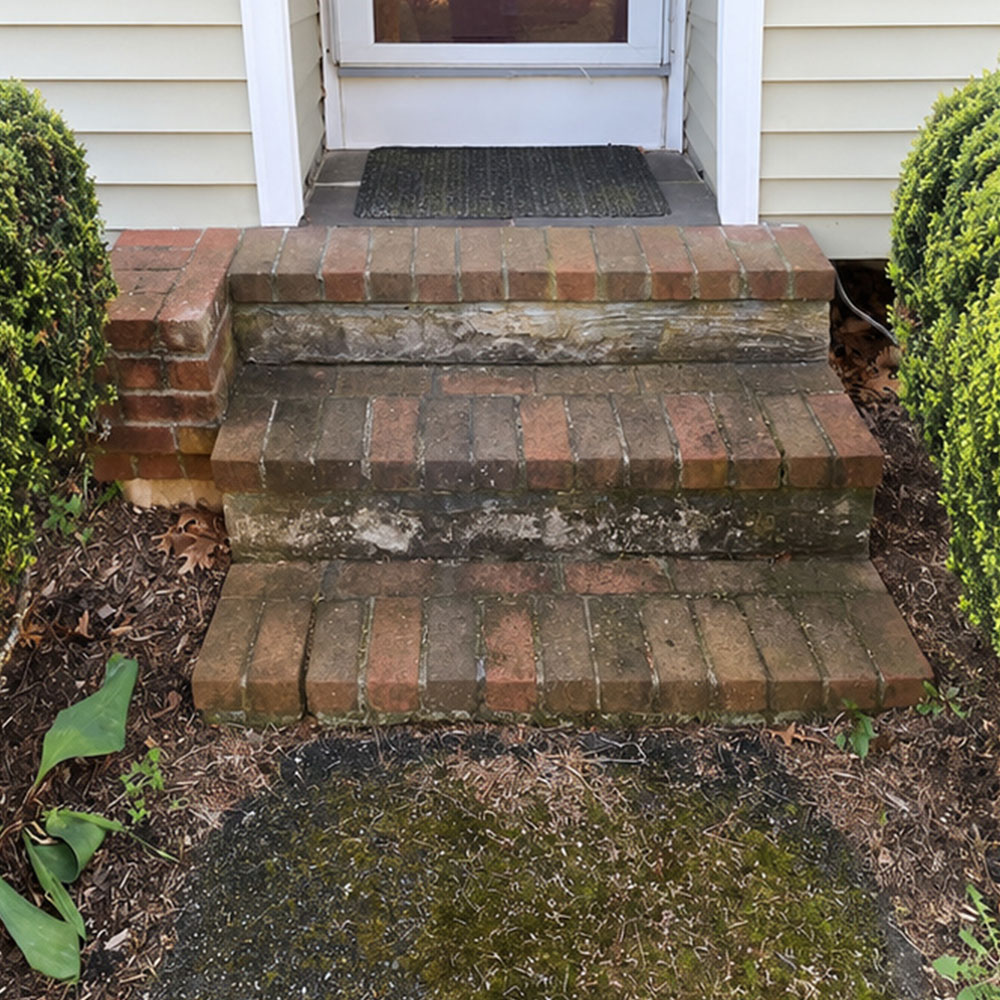
Isolated mortar deterioration or limited surface damage may be repairable. Widespread cracking, movement, settlement, unstable masonry, or incorrect step dimensions may indicate that replacement is the better solution. Cornerstone can evaluate the existing structure and explain what can be repaired, what should be replaced, and why.
Does Cornerstone remove existing precast or masonry steps?
Yes. When removal is part of the project, Cornerstone can demolish and remove existing precast or masonry steps and prepare the area for the replacement work. The exact scope depends on the condition and construction of the existing entry.
What materials can be used for replacement steps?
Replacement steps may incorporate granite treads and landings, brick, natural stone, manufactured stone veneer, and other masonry materials suited to the property and the way the entry will be used. Chris can help you compare materials and choose an approach that works with the building, site, and budget.
Can existing granite treads be reused?
Sometimes. If existing granite is in good condition and its dimensions work with the new layout, it may be possible to reset and reuse it. Chris evaluates the material and the proposed step configuration before recommending whether reuse makes sense.
Does masonry step replacement include a new footing?
Not necessarily. The need for a new footing depends on the condition and suitability of the existing base and the requirements of the replacement steps. Cornerstone evaluates what is beneath the existing masonry and includes any required footing or base work in the proposed scope.
How much does masonry step replacement cost?
Cost depends on the size and configuration of the entry, existing conditions, demolition and base work required, and the materials selected. Cornerstone provides a free estimate that clearly defines the proposed scope, materials, and costs before work begins.
Where does Cornerstone provide masonry step replacement?
Cornerstone is based in Easton and serves homeowners, property owners, and managers throughout southeastern Massachusetts and surrounding communities. Contact Cornerstone to confirm availability for your location.